Showing posts with label #52Ancestors. Show all posts

Friday, July 7, 2023

#52 Ancestors - Week 17 - Road trip

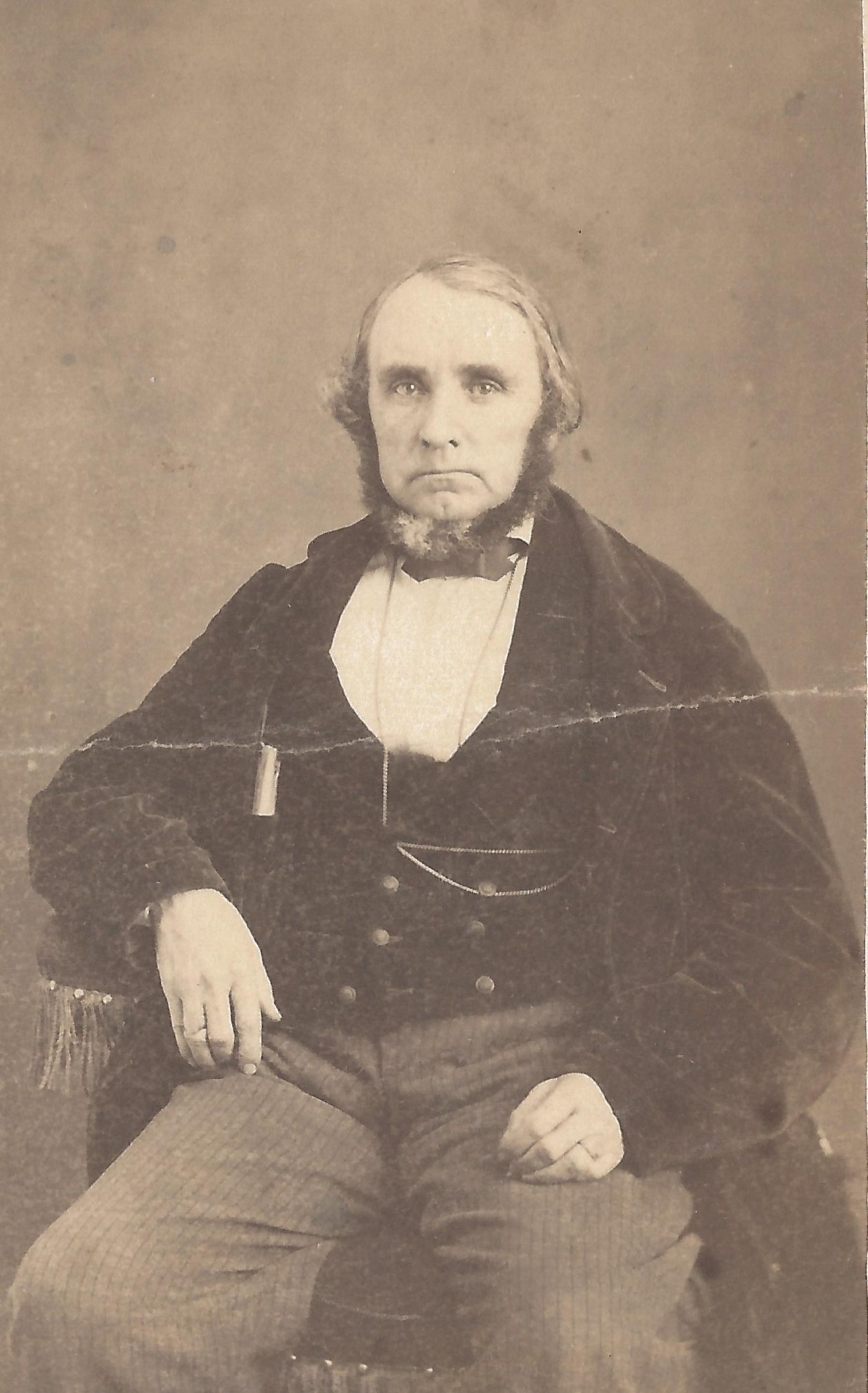
 Margaret Burt - 1814 - 1874.  Information taken from history found on FamilySearch, author unknown, and a history by Margaret H. Burt Tensmeyer written 20 Aug 1964.

Margaret was born in Dunfermline, Fife, Scotland, a daughter of Ann Allen and Peter Burt.  Her family worked in the coalmines.  She gave birth to fourteen children, six of whom died before the family immigrated to America. Margaret Tensmeyer states: "The condition portrayed in the show "How Green Is My Valley" [this is one of my favorite books, maybe I was drawn to it because of the connection] were very similar to the stories my father John Burt Jr. told about his experiences in the mines when he was a lad.  Women carried coal in baskets or creels, as they were called, their faces streaked with dust and sweat.  Horror gripped them at the sound of the disaster whistle, for those at home as well as the workmen."  

It is believed that she joined the church near the same time as her husband, John Burt, 19 July 1847.  Fifteen years later they would say good-bye and John would leave his wife and smaller children as he and his older daughter immigrated with a plan to send money for the remainder of the family to come to Utah.

About two years later, with the help of the Perpetual Emigration Fund (it was hard for either group to raise the money as wages in Utah were paid in provisions, clothing and exchange of work), they left London on the ship "Hudson" on the third day of June 1864.  Margaret and her five younger children were in the John McKay Company. 

Crossing the ocean, measles broke out.  Many adults died of it.  Margaret's family was blessed that they had no casualties.  Arriving in New York, 18 July 1864, they had spent 46 days on the water.  Soon after noon on the 21st they boarded a train leaving for the west.  At Buffalo a change of trains was made and they were made to ride in cattle cars that were not clean.  They came to learn that the land trip was more dangerous than the ocean voyage.  At times the train was boarded by Army men looking for deserters. 

Along the way many bridges had been torn, washed out and sometimes burned.  It was then expected of them to carry all the baggage across the streams.  They had to walk long distances at times.  While staying at a railway station after crossing the Mississippi River, a great storm arose and they sought some protection by the river.  "While there, some wicked men tried to drown them in the river." (Tensmeyer)  They again boarded cattle cars and at St. Louis all were placed on a river boat which carried them to Wyoming, Nebraska.  Here was the gathering place for the Saints to prepare for the trip west.  A large church house was the only building and was used as a storehouse for the Perpetual Emigration Fund under the leadership of Elder Erastus Snow.  Teams and supplies were sent from Utah.  

They were assigned to the Warren S. Snow Company.  They camped at Ft Kearney.  During the journey there were bad storms and snow came early.  Buffalo chips were used along the way for fuel.  Adults were buried along the way.  

John Burt Jr. said that they entered the valley in a blinding snow storm and that they were cold,  wet and hungry.  Because they were so late entering the valley the companies were given a special reception.  Saints came with hot soup, beef, potatoes, pies, tea, coffee and sugar and the sick were cared for and those that had no home were taken into homes of the Saints.  

Tensmeyer states, "Grandmother Margaret Burt Burt [her husband was a second cousin] was rather a large woman, strong in mind and body.  She had worked in the mines even when her fourteen children were being raised, staying at home only long enough to be confined, then she was required to take her place with the other able bodied women in carrying coal in baskets or creels, as they were called, for only a few cents a day."  John Burt Jr tells that his mother Margaret had long dark hair.  She had developed heart trouble and was ill for a long time.  "He stated that she was so lovable and kind, yet if she set her mind to accomplish anything even when time and odds were against her that task was completed."  (Tensmeyer)  

This was the ultimate road trip.  I've crossed the US via automobile five times - Utah to Boston, Utah to North Carolina and back, Utah to Virginia and back - with some adventures along the way.  I don't know how the immigrants did it as I complain about the size or softness of the beds.  They were strong people.  The women, though we sometimes think of them as weak, dependent or incapable, were anything but.  They worked hard providing for their families, often times without a spouse's help, they knew great sorrow, and I hope they experienced great joy.  They have left me a legacy that I know I am unable to duplicate.   

Friday, January 13, 2023

#52Ancestors - Week 11 - WHO WOULD I LIKE TO MEET

"Though hard to you this journey may appear, Grace shall be as your day." Come, Come Ye Saints, No. 30, Hymns of the Church of Jesus Christ of Latter-Day Saints, 1985. Did my great-great-great-grandmother Alice Hardman Clayton ever feel the comfort from this hymn written by her husband, William Clayton? Following are some facts as documented online in FamilySearch and found in An Intimate Chronicle, the Journals of William Clayton. Alice was christened on 23 April 1816 in Kirkham, Lancashire, a daughter of Richard and Elizabeth Hardman. William Clayton's journals make mention of the Hardmans, and Alice in particular, on several instances in 1840 during his mission to Manchester, and I believe she had been baptized before that time. The 1841 England census has her living with her mother in Manchester, Lancashire, England, at the age of 20. She is listed on the Louisiana, New Orleans Passenger Lists, age 24, arrived 26 April 1842 on the John Cummins. Entry in Clayton's journal, 13 Sept 1844: "At 3 went to see Alice Hardman who is sick and was united in the E[ternal] C[ovenant]. Alice's marriage to Austin Sturgess on November 3, 1844, two months after her marriage to William, is witnessed in a civil ceremony performed by Levi Richards. On November 20, 1844, about three weeks after Alice married Mr. Sturgess, William married Alice's cousin, Jane. Alice would later divorce William in 1858 and Jane would also divorce William (An Intimate Chronicle, pg 149 fn112). Footnotes in An Intimate Chronicle state that Alice began the trek west on February 27, 1846 with William Clayton, two other wives, four children, and a mother-in-law. Records on FamilySearch indicate William and Alice had four children: Clara Agness born 1852, died 1856 Isabella Alice born 1854, died 1913 Aaron and Moses both born January 1857 and died October 1857. Alice dies and is buried in November 1894 in Glenwood, Sevier County, Utah. I wish that I could speak with Alice and find out about her life. The entry about William and Alice’s marriage stating Alice "is sick" makes me wonder if she was married because they thought she was going to die? How was she married again a few weeks later? What were her marriage circumstances? Did she ever love William Clayton? How did she feel about plural marriage? How devastating were the deaths of her three young children? Did she have a testimony of the gospel, and could say, "Our God will never us forsake"?

Friday, February 11, 2022

#52Ancestors - Favorite Find

#52Ancestors 

FAVORITE FIND

    Included with some possessions that were given me from my grandfather, Hudson Webb, was a letter on embossed note paper dated December 15-97 (1897).  There are no names included but Grandpa referred to the letter in a history of his ancestors and states that it was from his mother, Annie, to her mother, Elizabeth. It has been kept between pages in a Temple Record book of Elizabeth's.  The colors are bright and it is in remarkable condition.  The folds are starting to wear.  The purple ink matches the purple flowers on the embossing -  was that intentional?

    The inside reads:  

    I am sending a pair of shoes, I hope it will not be unpleasant news, And I hope they will always keep you warm, That you from cold floors will never take harm.  Use them in all weather, rain or fine, For they were made for use, not as ornaments to shine, I trust there will be no unpleasant meetings, Between the two, but kindly Greetings.

    Many, many, happy returns of the day, God grant the future before you lay, Unclouded and bright as a summers day.  That all sorrow and pain from you may depart, and rest and all happiness fill your heart. God bless sand strengthen you all your days and keep you sheltered under his wing always.  


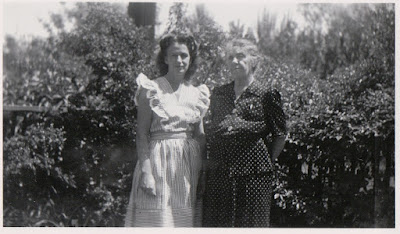
Sarah (Annie) with mother Elizabeth
Sarah (Annie) with mother Elizabeth 

Sunday, February 6, 2022

#52Ancestors - Week 9 (albeit a year late)


FOUNDATIONS

From A History of John Burt Jr. 1853-1926 by Margaret Hazel Burt Tensmeyer and Carolyn Tensmeyer Andersen.

Though he was engaged in building railroad, when Father (John Burt Jr.) could be in Salt Lake City, he courted a lovely young lady with hazel or dark grey eyes and golden hair.  They married on 6 Nov 1879.  Father took his bride to live in a new home he had built for her of adobe, next door to his father’s home on 3rd West Street.    

When the BURT and CONDIE Construction Company contracted railroad building up the Spanish Fork Canyon during 1884 and 1885, Father moved his family to Spanish Fork Town so that they would be near his work.  A small home was rented from Alfred Reese, who was the father-in-law of Adam Burt, father’s younger brother.  After returning to Salt Lake for a brief time, Father disposed of his property in Salt Lake City and moved his family permanently to a small two room house in the Palmyra District in Utah County.  The house was situated on a knoll, as was the small shed for horses.  The house was situated on a knoll, as was the small shed for horses.  The place had a tree or two, was not fenced and there were a few patches of alfalfa.  This needed much care, cultivation and water to yield a small crop.  The property in general was quite undeveloped and a great deal of clearing the land of grease-woods, saleratus and saltgrass had to be done.  It was rather low and ponds of water in the northern part had to be drained.  It had a good water-right for irrigation but it meant hard work and patience before it eventually yielded good crops.  Deep ditches were dug to carry away the alkali and salt water that formed when it rained or was irrigated.  Renewing the old irrigation ditches and making new ones to take care of the cleared off land kept the men folks busy.  It seemed the water turn came frequently and must be used to the best advantage.  It was a never ending job of grubbing and stacking of the pitch-filled brush.  When a large stack was dry enough, it was used in the stoves for firewood.  It gave a great deal of heat so sometimes we roasted corn and potatoes on a stack for a treat. 

Not far from the house was a clay bed and as Father knew the art of molding this substance into blocks, he made molds for blocks.  With these blocks he made a large room some 16 by 10 feet in size.  It was cool in summer and warm in the winter and made a lovely addition to the house.  A milk house was also built of adobe where the water ran through the wall into a trough and out the other end.  This was used as a refrigerator for milk, butter, eggs, meat and fresh fruit.

The home was five miles from the town of Spanish Fork where supplies were bought and the mailed picked up.  We were some distance from any neighbors and almost two miles from the Little Red School house where we went to school. 

In 1903 the original two rooms were torn down and the house from my mother’s brother’s property was moved to give us three large bedrooms.  This gave us ample room and many improvements were made to make it even more comfortable.  A defective flue caused a fire that destroyed the home and most of its contents in the spring of 1908.  This was such a tragedy to witness – our lovely home and precious belongings went up in flames.  Even the trees were blackened and barren from the heat.  A strong wind from the north fanned the flames and when we returned at night only the walls of the adobe room were standing, bleak and cold.  The remainder of the home was an ash heap. 

Mother, Samuel and myself and the two little girls were eating our lunch on that beautiful spring day in April.  The door to the kitchen was open and we smelled smoke.  The door to the front room was opened to investigate and the draft fanned the embers into flames.  In seconds the roof was on fire.  Our neighbors saw the fire and came to help but it was too late. 

A fund was raised by our friends to help replace the house.  Workmen swarmed all over the place to clear away the debris and start the new building.  By fall, it was ready to move into.  The new home did not have the room we had before and part was not finished but we were grateful to be back home again.  It took several years to replace clothing, bedding, dishes, pans and furniture. 

This was the prompt from Amy Johnson Crow the first week in 2022.  I have been putting off doing this blogpost since that time.  I knew that I wanted to do something about the construction company and John Burt Jr. but just never took the time.  As I read from the history, I had forgotten about the house fire.  I then thought that I needed to add current content to the blogpost to pull two stories together.

On Friday, January 14, 2022, I was at my son’s home in Utah County visiting for a few days.  I received a phone call from my brother-in-law stating that he couldn’t get a hold of my husband.  He told me that he was on his way home from work because he got a call that his house had burned down (in Kearns, Utah).  I told him I was on my way and would see him there.  I rushed there and this is what I found:


It was a total loss.  And it was heartbreaking.  My father-in-law had been living there with him at the time so they are both homeless.  They will rebuild on the foundation that is there.  Because of the over-priced and short-on-inventory housing market in the valley, four weeks later it continues to be difficult to find temporary housing.  It would be nice if this could be repeated from 1908:  A fund was raised by our friends to help replace the house.  Workmen swarmed all over the place to clear away the debris and start the new building.  By fall, it was ready to move into.  For all of our technology and advancements, community, family and friends remain the most important foundation in our lives.


Thursday, February 18, 2021

#52 Ancestors - Week 6 - Valentines

I thought with this one I would find as many stories as I could about how a couple met.  I'll work backwards.

Brock and Angie - He was deployed in the Navy to Iloilo, Philippines and used the Tinder dating app while he was there and met Angie.

Brad and Erin - They had a mutual friend and met at a group activity.

Bryce and Alicia - He was her roomate's home teacher in their BYU student ward and were in the same FHE group. 

Scott and Bobbi - Scott was a wrestler and I was a wrestlerette at Jordan High School in 1978.  

Ray and Maida - from Mom's history:  "He had given me a ride home from school in October.  I didn't know him, but he lived in Highland Park Ward, too.  He had joined the Air Force not long after we moved into the ward, but I do remember him in church when he came home on leave.  He would sit on the back row with his uncle, Jay Peterson, who was as dark as Ray was light.  (They were married one year later after the ride home.)

Ray and Wanda - from Dad's history:  "I am an only child.  My parents were divorced when I was an infant.  I believe my mother was pregnant before she was married, but she won't talk about it."

Hudson and Maida - from Hudson's audio history:  I had an opportunity to go to Daynes-Beebe, it was the big music business in the city.  Maida worked there, we worked side by side.  She was actually my boss.  And we dated.  Although not seriously.  I remember the first date I took her on.  We went to Wandamer, that was where the golf course is now, it is located at 7th East and 27th South [Salt Lake].  They had a lake there and on the lake they had a stage... I took her there and she got out of the car and he stepped in a ditch of running water.  Oh, I was embarrassed to death. 

Heber Peterson and Lovina Short - "For several years Lovina worked at the Glenwood [Sevier County, Utah] store and then she fell in love with a returned  missionary - Heber Peterson."  Heber owned a ranch at Grass Valley, a section of country between Glenwood and Fishlake.  

Charles Cottrell Jr. and Erminnie Layton - His mission journal begins with leaving his home in Kaysville for the depot and stopping at the home of Mr. Charles Layton (Erminnie's father) and wishing them all goodbye. 

John Burt Jr. and Mary Etta Seddon - "Though he was engaged in building railroads, when Father could be in Salt Lake City, he courted a lovely young lady with hazel or dark grey eyes and golden hair.  She lived in the 6th Ward - a few blocks away on 3rd West and 6th South St [Salt Lake City] and was employed by the Deseret Book Binding Company."    

This was fun exploring.  I need to do more and add to this when I can.  

Sunday, January 24, 2021

#52 Ancestors - Week 3 NAMESAKE


Week 3 – Namesake

This one took some thought, but I found a couple things. 

Scott’s line –

Elizabeth Geddes – 1799

                George Geddes Lindsay – 1834

                                George Geddes Lindsay – 1871

                                                George Geddes Lindsay III - 1900

                                                                George Geddes Lindsay – 1922

                                                                                George Lindsay – (nephew) around 1975???

I didn’t know that the Geddes was a maiden name.


Scott’s middle name is Lindsay which is his mother’s maiden name.  Our youngest son’s middle name is Lindsay.  That son married a Filipino gal.  Her middle name is her mother’s maiden name and the same with her siblings.  That is a Filipino custom – to have the middle name be the mother’s maiden name.  We are encouraging them to do the same with their children. 


From my side –

Thomas Ray Burt -1884

                Ray Afton Burt – 1911

                                Ray Afton Burt Jr – 1930 (he only had daughters)

                                                Grandson Bradley Ray – 1988

                                                                Great-granddaughter – Davi Rae – abt 2005

 That was a fun exercise. 

Friday, January 15, 2021

#52Ancestors - Week 2 - Family Legend

Week 2 – Family Legend

These two stories are the ones that are re-told over and over at family gatherings.  I feel it is important to record it here for posterity’s sake.


Hand-made
Almost 40 years ago Scott and I were newlyweds living in Cedar City while Scott attended SUSC. One evening he was baking us a treat – brownies.  He had added the boxed mix, the eggs and the oil to the bowl and started mixing.  I glanced up at him and noticed his hand was deep in the bowl and I asked him what he was doing.  He said:  “It says mix by hand” as he lifted his hand from the bowl, dripping with a chocolate goop.  He was an accountant in training.  He followed instructions.  Literally.


Road Trip

My niece was a new driver (pre-Google maps and everyone having cell phones), so probably 16 years old (about 24 years ago), as she traveled by herself from her home in Lindon, Utah to Taylorsville, Utah, north along a long stretch of I-15 for a drill team/dance competition.  When the evening’s activities finished, she got back in the car and began the trip back home in the dark of night.  She got on the freeway and drove.  And drove.  And drove.  She couldn’t see her exit but figured it would be the next one.  Or the next one.  Finally, scared and confused, she got off the freeway and tearfully pulled into what she hoped would be a safe place at the Wagon Wheel Restaurant in Ft. Bridger, Wyoming.  She had driven for 2 hours east instead of 45 minutes south.  The owners welcomed her in and had her sit in a booth while they called her parents.  Her dad suggested she get back on the freeway and he would meet her somewhere along I-80.  She refused.  She was not about to get in the car and drive.  So while that kind couple watched over her, her mom and dad drove over 2 hours to rescue her and the car and get them all back home safely. 


Sunday, January 10, 2021

#52 Ancestors - Week 1 - BEGINNINGS

I’m receiving emails once a week beginning this year that gives a theme prompt to write about ancestors in an effort to share with others what we know or what we’ve learned through research.  I started receiving these last year also (and probably other years) but have never followed through.  Here’s hoping 2021 is a new beginning.

Week 1 – Beginnings

“Beginnings” made me wonder about the beginnings of church membership of my ancestors.  Our course of study in church this year is the Doctrine and Covenants and these first couple of weeks have concentrated on the restoration.  I wondered who was my first ancestor to be baptized a member of the Church of Jesus Christ of Latter-Day Saints?  I’ve not started putting church ordinance dates in my RootsMagic database yet so I didn’t have that information readily available.  I did a quick search on FamilySearch and found:

Name                                         Baptism Year

John Burt Sr                              1848

William Clayton                         1837

Caroline Knowles                      1841

Charles Cottrell                         1850

Raphael Henry Cottrell             1850

Charles Layton                          1849

Sarah Ambrosine Crockett        1849

Sarah Rogers                             1849

Some ancestors had baptism dates after they immigrated with the saints to Utah.  Did they come without being a baptized member?  

Caroline Knowles

I’m not sure that the baptism date is correct.  It doesn’t quite match up with the dates given in the history Sketch of Life of Caroline Knowles Webb, a Utah Pioneer of 1850 found in Family Search: “In the year 1847 [?], during the gold excitement of California, her father and mother and sister, Sarah, left the East to locate in California.  Caroline, who was then nineteen years old – and her two brothers, Thomas and Henry – became interested in Mormonism, and decided not to go to California, and against their parents wishes, who were very bitter towards Mormonism, Caroline and her brothers joined the church.”

William Clayton

From An Intimate Chronical: The Journals of William Clayton:  "On July 20, 1837, the six members of the first Mormon foreign mission landed in Liverpool amid both economic recession and national excitement; England’s newly-crowned Queen Victoria was preparing to name her cabinet.  The mission went directly thirty miles northwest to Lancashire, the scene of the textile mills which were an early expression of the Industrial Revolution.  The missionaries began preaching in the church of Reverend James Fielding in the large factory town of Preston.” [Footnote: “One of the Mormon missionaries, Joseph Fielding, was a British emigrant who had been invited by his brother, Reverend James Fielding, to return there to preach.  The Reverend cancelled his welcome to the Mormons”.]  “Twenty-three-year-old William Clayton, who lived across the river in the area of Penwortham parish, became an early convert to the new church.  On October 21, 1837, mission leader Heber C. Kimball baptized Clayton in the River Ribble.”


A quick check of the “Memories” on FamilySearch does not give much information concerning the baptism of the others listed above. 

I’m appreciative of my ancestors who joined the new church, immigrated to the United States and Utah and built a foundation upon which my faith would be laid.